

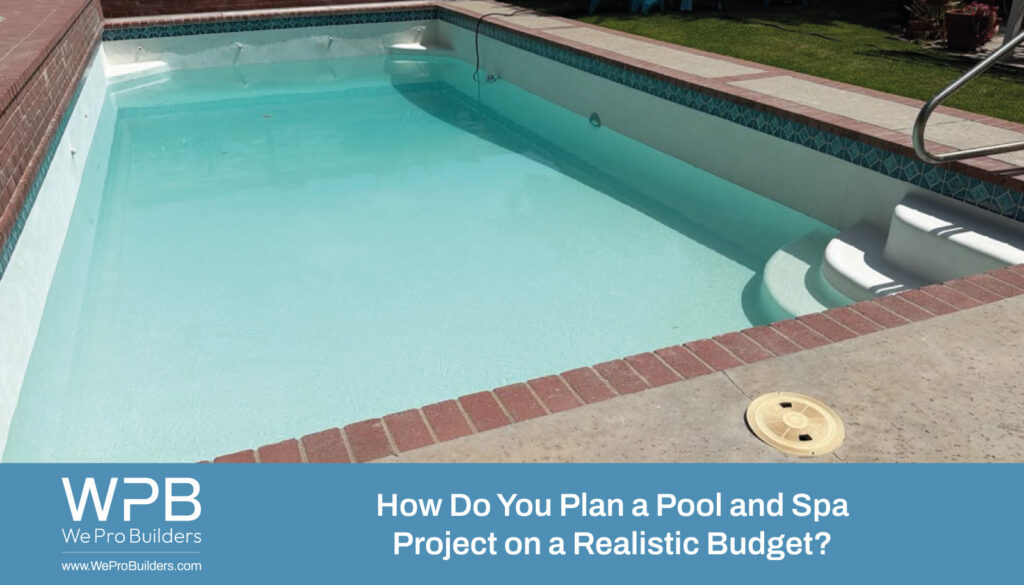
A realistic pool budget begins with the entire project rather than the shell alone. Excavation, engineering, permits, safety features, decking, utilities, equipment, drainage, landscaping, and access can all affect the final price. Careful planning for pool and spa construction helps homeowners make design decisions before work begins and reduces the risk of expensive changes during construction.
The right pool & spa contractor should explain what is included in the estimate, which conditions could change the price, and how optional features affect both installation and long-term ownership costs. A useful budget also includes a contingency for soil problems, access limitations, utility conflicts, or plan revisions.
Pool and Spa Construction Begins with a Complete Budget
Start by deciding how the finished space will be used. A pool designed for exercise has different size and equipment requirements than one created for entertaining, children, relaxation, or visual appeal.
The budget should account for:
- Design and engineering
- Permits and plan review
- Demolition and site preparation
- Excavation and soil removal
- Structural construction
- Plumbing and electrical work
- Pool and spa equipment
- Interior finishes, coping, and tile
- Decking and drainage
- Required safety features
- Landscaping and final cleanup
- Contingency funds
Leaving these items out of the initial budget can make an affordable estimate appear complete when it only covers part of the project.
How Much Does a Pool and Spa Project Cost?
Current Southern California estimates commonly place a standard inground concrete pool between approximately $85,000 and $150,000. Projects that add a spa, premium finishes, extensive decking, automation, water features, or difficult site work may range from $150,000 to $250,000 or more.
These figures are planning ranges, not fixed quotes. Property access, soil conditions, engineering, location, design, and material choices can cause two similarly sized pools to have very different prices. Homeowners need a site-specific proposal before setting the final budget.
What Factors Have the Biggest Impact on Pool Construction Costs?
Size matters, but it is not the only major cost factor. A smaller pool on a steep property with limited equipment access may cost more than a larger pool on a flat, open lot.
The largest variables often include:
- Pool dimensions and depth
- Soil and slope conditions
- Excavation and hauling requirements
- Backyard access for construction equipment
- Structural engineering
- Required retaining walls
- Pool shape and design complexity
- Spa integration
- Decking size and materials
- Plumbing, gas, and electrical distances
- Finish, coping, and tile selections
- Automation, heating, and water features
Identifying these conditions during planning produces a more dependable estimate.
How to Build a Realistic Backyard Pool and Spa Budget
Separate the budget into essential construction, preferred upgrades, and optional features. Essential costs include the structure, circulation equipment, permits, required safety measures, utilities, and necessary site work. Preferred upgrades may include a spa, upgraded finish, expanded decking, or automation.
Optional features should be priced individually. This allows homeowners to remove or postpone items without disrupting the core project. A contingency of approximately 10% to 15% may also help cover hidden site conditions or changes that cannot be confirmed before excavation.
Which Luxury Pool and Spa Designs and Features Are Worth the Investment?
The most valuable features are those the household will use regularly. A heater, efficient variable-speed pump, automatic controls, durable interior finish, and properly planned lighting may provide more lasting value than decorative features used occasionally.
Integrated spas can be worthwhile for homeowners who expect frequent year-round use. Baja shelves, benches, and wider entry steps may improve comfort and accessibility. Infinity edges, elaborate water features, custom rockwork, and specialty materials can create a distinctive result, but they also increase construction and maintenance costs.
Custom Pool and Spa Services Should Match Your Priorities
Custom pool and spa services should begin with the homeowner’s preferred use, property limitations, and firm spending range. The design should not include every available feature simply because the space can accommodate it.
Ask for pricing at different design levels. Comparing a core design with one or two upgraded versions makes it easier to understand which additions provide meaningful benefits and which primarily increase the price.
Comparing Residential Pool Builders and Complete Estimates
Proposals from residential pool builders may use different allowances, materials, equipment, and exclusions. A lower total may omit permits, electrical upgrades, decking, soil hauling, landscaping restoration, or required safety work.
Compare the scope line by line instead of looking only at the final number. Verify the contractor’s California license, insurance, payment schedule, warranty information, equipment specifications, estimated timeline, and responsibility for inspections.
What to Expect from a Swimming Pool Construction Company
A qualified swimming pool construction company should evaluate access, grading, drainage, utilities, setbacks, and the proposed layout before finalizing the price. The company should also explain the design, plan-review, construction, inspection, and startup stages.
Homeowners should receive a written scope identifying materials, equipment, allowances, exclusions, and payment milestones. Verbal promises should be added to the contract before work begins.
How Inground Pool Construction Affects the Budget
Inground pool construction involves excavation, soil removal, steel reinforcement, plumbing, structural concrete, waterproof finishes, coping, equipment, and inspections. Each phase depends on the condition of the property and the approved plans.
Rocky soil, expansive soil, groundwater, hillside conditions, narrow access, and long utility runs can increase costs. A site evaluation cannot uncover every underground condition, but it can identify many risks before the design is finalized.
Budgeting for Custom Spa Installation
Custom spa installation adds structural, plumbing, heating, finish, and control costs to the project. An attached spa may share equipment with the pool, while a separately designed spa may require additional systems and site preparation.
Homeowners should consider expected use, seating capacity, jet placement, heating time, energy consumption, and accessibility. A larger spa is not automatically better if it takes longer and costs more to heat.
Costs Beyond Spa and Hot Tub Installation
Spa and hot tub installation costs continue after construction. Electricity or gas, water care, cleaning, equipment servicing, covers, and eventual repairs should be included in the ownership budget.
Efficient equipment and a fitted cover may cost more initially but can reduce energy loss. Ask the builder to estimate operating requirements and explain which components will need routine maintenance.
When Pool Remodeling Services Offer Better Value
Pool remodeling services may be more practical when the existing shell remains structurally usable. Resurfacing, new tile, updated coping, equipment replacement, lighting, plumbing improvements, or deck changes can significantly update an older pool.
Remodeling is not always the inexpensive option. Structural damage, major leaks, extensive layout changes, or outdated systems may push the cost closer to substantial reconstruction. An inspection should determine which components can remain.
How to Save Money Without Sacrificing Quality
Save by simplifying the pool shape, limiting unnecessary depth, controlling the amount of decking, and selecting durable midrange finishes. Finalizing decisions before construction also reduces costly change orders.
Do not cut costs by skipping permits, drainage work, engineering, safety requirements, or properly sized equipment. These areas affect code compliance, performance, and long-term durability.
Why Choosing the Right Pool & Spa Contractor Matters
The contractor influences design accuracy, scheduling, subcontractor coordination, inspections, material quality, and cost control. A detailed proposal helps homeowners understand where their money is going and which expenses remain outside the contract.
Ask about recent projects with similar site conditions, change-order procedures, warranties, and communication practices. Contractors should be willing to explain allowances and exclusions without pressuring homeowners into immediate decisions.
How We Pro Builders Helps Clients Stay on Budget
The company provides pool and spa work as part of its outdoor construction and complete backyard remodeling services. Its planning process includes discussing goals, evaluating the property, defining the scope, confirming design details, and establishing expectations before construction begins.
Clients can review material choices, project features, and related backyard work as part of one coordinated plan. Clear pricing and project oversight help homeowners understand how each decision affects the overall investment.
Frequently Asked Questions About Pool and Spa Budgets
Should I set my budget before meeting with a pool builder?
Yes. Establish a comfortable maximum investment before discussing designs, but allow the builder to explain whether that amount matches the property and desired features. Sharing a realistic range prevents time from being spent on designs that cannot be constructed within the available budget.
How much contingency should I include?
Many homeowners reserve approximately 10% to 15% of the planned project cost. Properties with difficult access, slopes, uncertain soil, older utilities, or extensive demolition may justify a larger reserve. The contingency should not be used to add optional features before major site risks have passed.
Should every estimate include permits and inspections?
Do not assume they are included. The proposal should identify permit fees, plan preparation, engineering, required corrections, and inspection coordination. It should also state whether government fees are fixed, estimated, included as an allowance, or paid directly by the homeowner.
How do I compare estimates from more than one pool & spa contractor?
Compare the pool dimensions, depth, steel schedule, plumbing, equipment, finish, coping, tile, decking, utilities, safety features, permits, warranties, and exclusions. One bid may appear lower because it includes smaller allowances or leaves important work outside the contract.
Can pool features be added later?
Some items, including furniture or portions of landscaping, can be added later. Structural features, plumbing lines, built-in spas, sun shelves, and certain water features are usually easier and less expensive to incorporate during the original build. Ask which upgrades require advance planning even if installation will be postponed.
Summary
A realistic budget accounts for design, permits, site preparation, structural work, equipment, safety measures, finishes, surrounding improvements, and a contingency. Successful pool and spa construction depends on matching the design to the property and separating essential work from optional upgrades. Clear proposals and early decisions help homeowners control costs without compromising construction quality.
Best Pool & Spa Builder: We Pro Builders
Ready to make your backyard an oasis? We Pro Builders can make it happen. A leading pool and spa contractor in Southern California, we are dedicated to bringing our innovative pool and spa designs. Get a free estimate and find out how affordable, yet gorgeous, our first-class pool and spa creations are. Call us today: (818) 455-1826.