

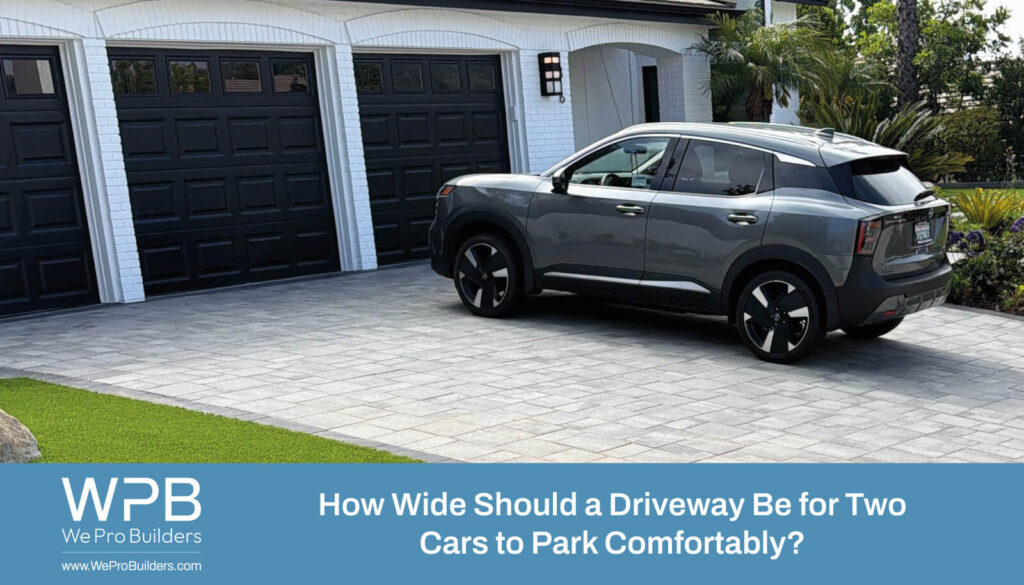
For two cars to park side by side comfortably, a residential driveway is commonly planned at approximately 20 to 24 feet wide, although the appropriate dimensions depend on vehicle size, available space, access, and local requirements. Larger vehicles or households that want more room to open doors and walk between cars may benefit from additional width. Front yard and driveway construction permits should be considered before finalizing dimensions because local regulations can affect the allowable design.
Professional front yard and driveway construction in California should also account for more than the parking area itself. The approach from the street, slope, drainage, garage position, landscaping, pedestrian access, and existing property configuration all influence how comfortable the driveway will be in everyday use.
Standard Minimum Width Guidelines for Side-by-Side Parking
Two-car driveways are often designed around approximately 10 to 12 feet of width per vehicle. This creates a general starting range of 20 to 24 feet for side-by-side parking.
A technically adequate driveway and a comfortable driveway are not always the same thing. Vehicle dimensions, mirrors, door clearance, garage openings, columns, walls, landscaping, and adjacent walkways can all influence how much usable space remains once two cars are parked.
Why 10 to 12 Feet per Vehicle Is the Starting Point
Ten feet per vehicle can work where space is limited, while additional width can make parking and exiting considerably easier. A household with two compact cars may have different requirements than one with SUVs, pickup trucks, or vans.
When planning front yard and driveway construction in California, dimensions should reflect the vehicles that regularly use the property rather than relying solely on a generic measurement.
Adding Extra Width for Walking Space Between Cars
A few additional feet can change how the driveway functions. Drivers and passengers need room to open doors, unload groceries, move children in and out of vehicles, and walk between parked cars.
The surrounding front yard should also be considered. A dedicated pedestrian path can reduce the need to walk around vehicles, while thoughtful landscaping can define the driveway without narrowing the usable parking area.
Adjusting Length for Larger Vehicles Like Trucks and Vans
Width is only one part of comfortable parking. Full-size trucks, long SUVs, and vans may require additional driveway length so vehicles do not extend across sidewalks or interfere with gates, garage doors, or pedestrian routes.
Measure the vehicles that will routinely occupy the driveway and allow practical clearance around them. Future vehicle needs can also be worth considering when investing in a permanent driveway redesign.
How Slope and Surface Affect Real-World Comfort
A driveway may have generous dimensions and still feel difficult to use if its slope, transitions, or surface are poorly planned. Steeper grades can affect vehicle clearance and make walking less comfortable, while abrupt transitions may cause low vehicles to scrape.
Drainage is equally important. Water should be directed appropriately rather than collecting on the driveway or moving toward structures. Proper front yard and driveway construction permits may require plans to address grading, drainage, curb work, or other site-specific conditions.
Sizing for Tight or Irregular LA Lot Layouts
Los Angeles properties do not always provide a straightforward rectangular space between the street and garage. Narrow lots, angled garages, existing walls, mature landscaping, slopes, and unusual property configurations can all affect driveway dimensions.
In these situations, efficient design becomes especially important. Adjusting the approach angle, coordinating pedestrian paths, refining landscape areas, or using the available width differently can make a constrained front yard function more effectively.
Ground Preparation That Keeps a Wider Driveway Stable Long-Term
The finished surface is only as dependable as the preparation beneath it. Wider driveways must support vehicle loads across the entire paved area, making excavation, grading, compaction, and base preparation essential parts of construction.
The appropriate preparation depends on soil conditions, selected paving material, drainage, and anticipated vehicle loads. Pavers, concrete, and other driveway surfaces also have different installation requirements that should be incorporated into the project from the beginning.
California Building Permits and Driveway Requirements
California building permits and related local approvals can affect driveway projects depending on the work involved. Changes to driveway approaches, curb cuts, drainage, grading, paving, or other improvements may require review by the applicable local agencies.
Requirements can differ between jurisdictions, so front yard and driveway construction permits should be confirmed for the specific property before construction begins. This is particularly important when improvements extend beyond the private portion of the lot or affect public right-of-way areas.
Getting a Site-Specific Recommendation for Your Property
General dimensions are useful for early planning, but the most comfortable driveway width depends on the property itself. We Pro Builders evaluate the front yard, vehicle sizes, garage access, slope, drainage, existing hardscape, landscaping, and overall architectural setting before developing a recommendation.
Our approach to front yard and driveway construction in California considers parking alongside the complete exterior design. The goal is a driveway that provides comfortable vehicle access while working naturally with walkways, landscaping, entry areas, and the architecture of the home.
Summary
A two-car driveway commonly starts around 20 to 24 feet wide, with additional space often improving door clearance and pedestrian movement. Vehicle dimensions, driveway length, slope, drainage, garage placement, and lot configuration should all influence the final size. Proper planning also ensures that the driveway relates well to the surrounding front yard instead of consuming space without improving overall function.
Frequently Asked Questions
Is 20 Feet Wide Enough for a Two-Car Driveway?
Twenty feet can accommodate two vehicles side by side in many situations, but comfort depends on vehicle width and surrounding obstacles. Additional width can provide more room for opening doors and walking between parked vehicles.
How Wide Should a Driveway Be for Two SUVs?
SUV dimensions vary considerably, so the vehicles should be measured before establishing the final driveway width. A wider layout may be preferable when both vehicles are large or when generous door clearance is a priority.
Do I Need a Permit to Widen My Driveway in Los Angeles?
Permitting requirements depend on the proposed work and location. Widening that affects a curb cut, driveway approach, drainage, grading, or public right-of-way may require additional approvals. Requirements should be confirmed for the specific property.
Can a Sloped Los Angeles Property Have a Wider Driveway?
Potentially. The feasibility depends on grade, drainage, access, retaining conditions, property configuration, and applicable regulations. A site evaluation can determine how additional width can be incorporated safely and effectively.
What Is the Best Driveway Material for Two Cars?
Concrete and pavers are common choices, but the appropriate material depends on the home’s design, desired appearance, maintenance expectations, site preparation, drainage, and budget. Proper base preparation and installation are critical regardless of the finished surface.
Needing Front Yard and Driveway Construction in California?
If you are ready to remodel your front yard and driveway? We Pro Builders, can make it happen. A front yard and driveway contractor in Southern California. Get a free estimate and find out how affordable, yet gorgeous, our first-class front yard and driveway creations are. Call us today: (818) 455-1826.